AI Hearing Aids: How Artificial Intelligence Is Changing Hearing Care
AI Hearing Aids: What Does Artificial Intelligence Actually Do for Your
Now part of the Beltone Hearing Care Network, visit www.beltonesound.com for a complete listing of all locations in the US
Artificial intelligence is becoming part of everyday life. It helps our phones recognize our voices, our cars respond to changing road conditions, and many of the devices we use every day work more efficiently in the background.
Today, AI is also becoming an increasingly important part of hearing aid technology.
But what does that actually mean?
When people hear the phrase “AI hearing aids,” they often imagine something futuristic or overly complex. In fact, the main aim of this technology is quite practical: to help hearing aids better interpret the surrounding environment and make adjustments that enable you to hear more comfortably and clearly.
For someone with hearing loss, that can matter most in situations where hearing is often the hardest—restaurants, family gatherings, meetings, social events, or anywhere several sounds compete for attention.
At Salem Audiology Clinic, we believe understanding hearing technology is just as important as having access to it. So, let’s take a closer look at what artificial intelligence in hearing aids actually does—and what it doesn’t.
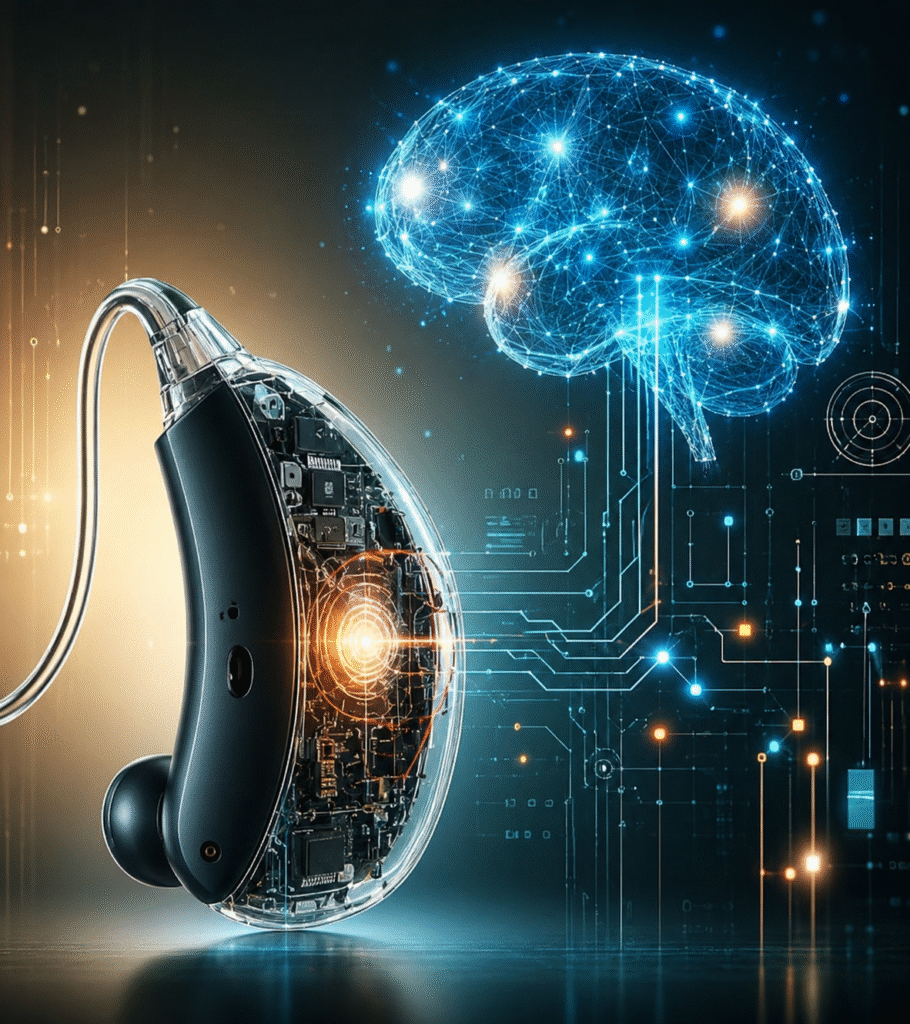
Modern hearing aids are much more sophisticated than simply making sounds louder.
Inside today’s devices are small, powerful processors that are constantly analyzing incoming sound. Some newer hearing aids use artificial intelligence, machine learning, and other advanced processing systems to help identify patterns within that sound.
Think about everything your ears may experience during a normal day.
You may start your morning in a quiet kitchen, drive through traffic, have a conversation at work, meet someone for lunch at a busy restaurant, and finish the day watching television with your family.
Each environment gives a distinct listening challenge.
A quiet conversation may require very little noise management, whereas a crowded restaurant may include dozens of voices, music, clattering dishes, and other sounds happening at the same time.
AI-based hearing technology can help a hearing aid recognize these differences and adjust how it processes sound in different environments.
The goal is simple: less time thinking about your hearing aids and more time participating in what is happening around you.

One of the most common things we hear from patients is:
“I can hear people talking. I just can’t always understand what they’re saying.”
This becomes especially pronounced when background noise is present.
Hearing loss does not always mean that everything simply sounds quieter. For many people, speech begins to lose clarity. Words can blend together, certain consonants become harder to distinguish, and conversations require more concentration than they once did.
Adding ambient restaurant noise, multiple conversations, or nearby music can make speech comprehension even more challenging.
This is one area where researchers and hearing aid manufacturers are putting significant attention into artificial intelligence and advanced sound processing.
Rather than treating every sound equally, newer technology is becoming better at distinguishing speech from competing noise.
That does not mean an AI hearing aid can completely eliminate the noise around you. A busy restaurant will still sound like a busy restaurant.
Instead, the goal is to better manage competing sounds while helping important speech remain accessible.
Imagine walking into your favorite restaurant. As soon as you step inside, your state-of-the-art hearing aids begin to process a complex blend of sounds: conversations at nearby tables, music, the clatter of utensils, footsteps, the server speaking to you, and the person sitting across the table.
Your brain then determines which sounds require your attention.
Modern hearing aids can automatically analyze these environments and adjust their settings based on what they detect. When you step outside, the environment shifts—there might be wind, traffic, or quieter conversations—and your hearing aids adapt seamlessly.
This automatic adjustment exemplifies the advanced technology behind today’s hearing aids. Instead of manually switching programs or using an app, these devices work discreetly in the background, offering a more natural, less distracting listening experience throughout your day.
This area of hearing aid technology is quite exciting, though it’s important to keep expectations grounded. Researchers are exploring how machine learning and deep neural networks can enhance hearing aids by helping them better distinguish speech from background noise in real time.
These systems aim to recognize patterns in complex sound environments and make smarter decisions about sound processing. This can be particularly helpful in situations where multiple people are talking at once.
Instead of simply amplifying all sounds, modern hearing aids might include features like directional microphones, noise reduction, environmental classification, and AI-driven adjustments to focus on what’s most important.
For those who avoid busy restaurants because conversations can be overwhelming, or who find it hard to follow family gatherings, such advancements could make a real difference.
That said, AI isn’t magic. No hearing aid can deliver perfect speech understanding in every environment. The actual benefit varies depending on factors like the type and degree of hearing loss, the listening setting, the technology’s capabilities, and how well the device is fitted and programmed.
There is another part of hearing loss that does not receive nearly as much attention: how tiring it can be.
When hearing becomes more difficult, your brain often has to work harder to fill in the pieces of conversation you miss.
You may find yourself watching someone’s lips more closely, guessing words from context, or concentrating intensely just to follow a normal conversation.
By the end of a dinner, meeting, or social event, you may feel mentally exhausted.
This is often referred to as listening fatigue.
Technology that helps improve access to speech and better manage competing sounds may reduce some of the effort required to follow conversations.
That matters because better hearing is not simply about increasing volume. It is about making communication easier and helping people remain engaged in the conversations and activities that are important to them.
Another advantage of modern hearing technology is the ability to personalize the listening experience.
Two people can have similar hearing test results and still live completely different lives.
One person may spend most of their time having conversations at home, gardening, and watching television.
Another may frequently attend meetings, eat at restaurants, travel, go to concerts, or spend time with large groups of family and friends.
Those people may not benefit from exactly the same hearing solution.
That is why lifestyle is such an important part of selecting hearing technology.
At Salem Audiology Clinic, we look beyond the results of the hearing test. We want to understand where you are having difficulty hearing and what you want to get back to doing comfortably.
The newest technology is not automatically the best technology for every person.
The right technology is the technology that fits your hearing needs and your life.
No—and this is an important distinction.
Hearing aids do not restore hearing to normal, and artificial intelligence does not change that.
What today’s hearing aids can do is give us increasingly sophisticated tools to improve access to sound, manage challenging listening environments, and personalize how sound is delivered based on an individual’s hearing needs.
There is also an adjustment period for many new hearing aid users.
Sounds that have been missing or reduced for years may suddenly become noticeable again. Your own voice may sound different. Environmental sounds may seem more prominent at first.
That is normal.
Successful hearing care often involves follow-up appointments, adjustments, and time for your brain to become accustomed to hearing sounds more consistently again.
With all this technology built into modern hearing aids, you might wonder:
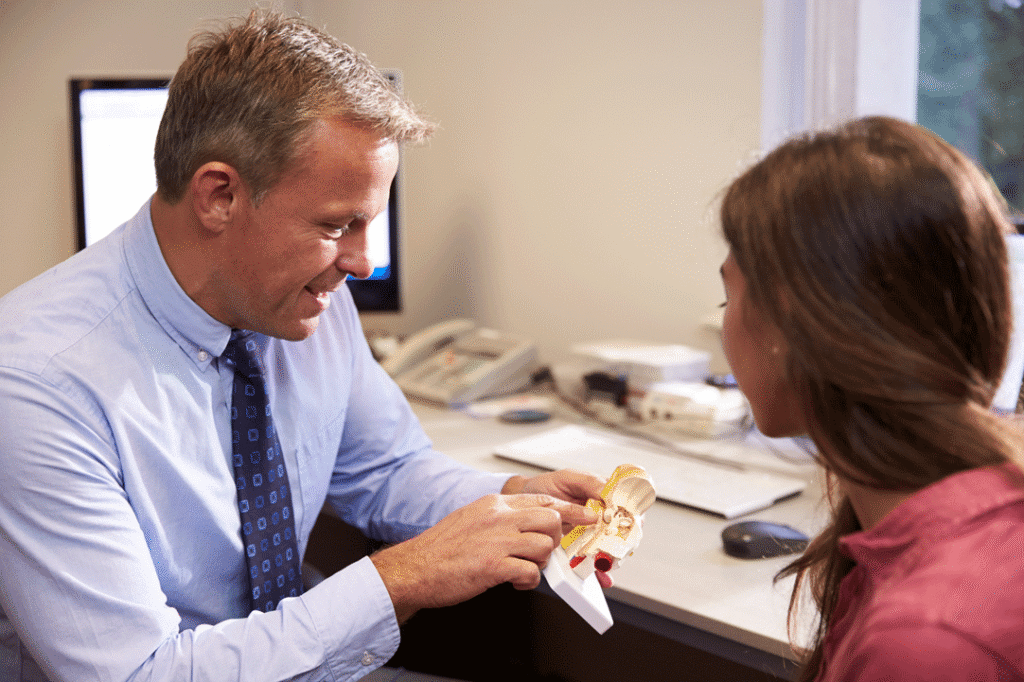
If the hearing aid is so smart, does professional fitting still matter?
Absolutely.
Even the most advanced hearing aid needs to be selected and programmed based on the person wearing it.
A comprehensive hearing evaluation helps us understand the type and degree of hearing loss, but that is only the beginning.
Your audiologist also considers your communication needs, lifestyle, hearing history, physical comfort, and the situations where you struggle most.
Once hearing aids are selected, proper fitting, verification, counseling, and follow-up adjustments can make a significant difference in how well the technology works for you.
AI can make hearing aids smarter.
It cannot replace personalized hearing healthcare.
You do not necessarily need to search for the hearing aid with the most AI features or the longest list of technology.
A better place to start is by thinking about your everyday life.
Those experiences tell us a great deal about what you may need from hearing technology.
And sometimes, the first step is not choosing a hearing aid at all.
It is simply finding out how well you are hearing.
Hearing aid technology will continue to change. Artificial intelligence, machine learning, connectivity, rechargeable technology, and advanced sound processing are giving hearing professionals more tools than ever before, and that’s exciting.
But at Salem Audiology Clinic, we believe the most important part of hearing care remains unchanged.
It starts with listening to you.
If you have noticed that conversations are becoming harder to follow, background noise feels overwhelming, or you are simply curious about how your hearing has changed, a comprehensive hearing evaluation can provide answers.
From there, our audiologists can help you understand your hearing, discuss available technology, and determine which options make sense for your needs and lifestyle.
Because the goal is not simply to have smarter hearing aids.
The goal is to help you stay connected to the people, conversations, and experiences that matter most.
Salem Audiology Clinic
Where You Can Trust What You Hear
AI Hearing Aids: What Does Artificial Intelligence Actually Do for Your

Community Hearing Loss Tinnitus
Every day, millions of Americans rely on medications to fight infections,

The Link Between Hearing Loss and Fall Risk: Why Hearing Health Matters
Testimonials
For more than 40 years, families across the Willamette Valley have trusted Salem Audiology Clinic with their hearing care. Here’s what some of our patients have shared about their experience with us: